Visual System
From bass line to cover image. Six mappings. One city, one bear.
The project has multiple art layers beyond the audio itself: the fantasy names, the five-scene stories, the cover images, and the fusion of music and technical creation by a single artist. The loop names are considered an original piece of art in themselves. Each name became the seed of a story, and each story became five images.
See the recordings behind the images: Loops.
From name to story to image
The creation follows a two-stage process. First, a story is generated for each series. The inputs are the loop name and the musical attributes of each loop: style, tempo, groove, progression, scale, technique. Those six properties define the loop's musical character, and they define the story's emotional shape.
Then the image generation stage merges the story with per-image musical attributes to produce each cover image.
ChatGPT from early 2025 was used for story creation. OpenAI's gpt-image-1, the first useful image model after DALL·E 3, was used for image creation. The images use a layered prompting technique where reusable sections are assembled into final prompts. Each image prompt is roughly 200 lines long.
Two hundred lines of musical attributes mapped to visual instructions, scene details pulled from a five-part story, and stylistic constraints applied consistently across 470 images.
The music shapes the image
A consistent musical-to-visual attribute mapping translates each musical property to a visual property across the entire project. Loops with similar attributes produce similar visual outputs. The mapping is systematic.
Six mappings define the system:
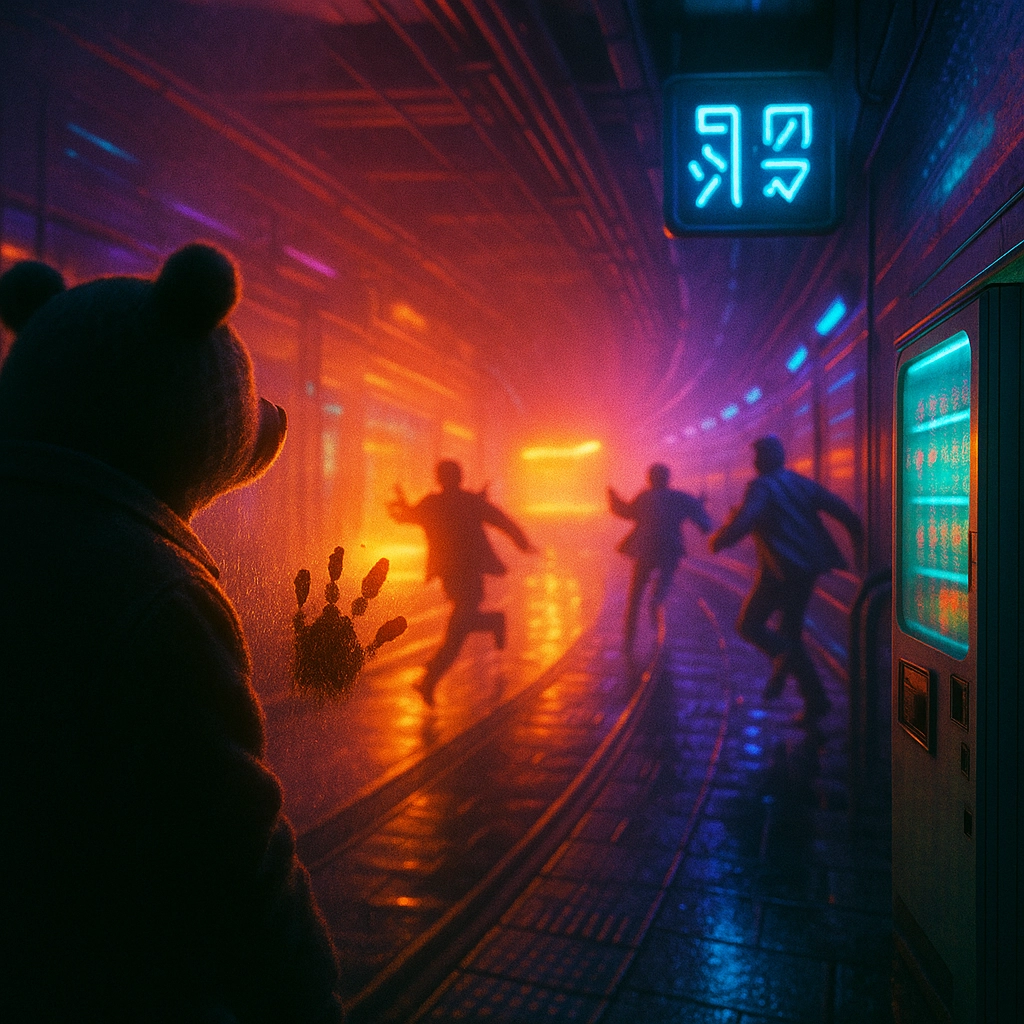
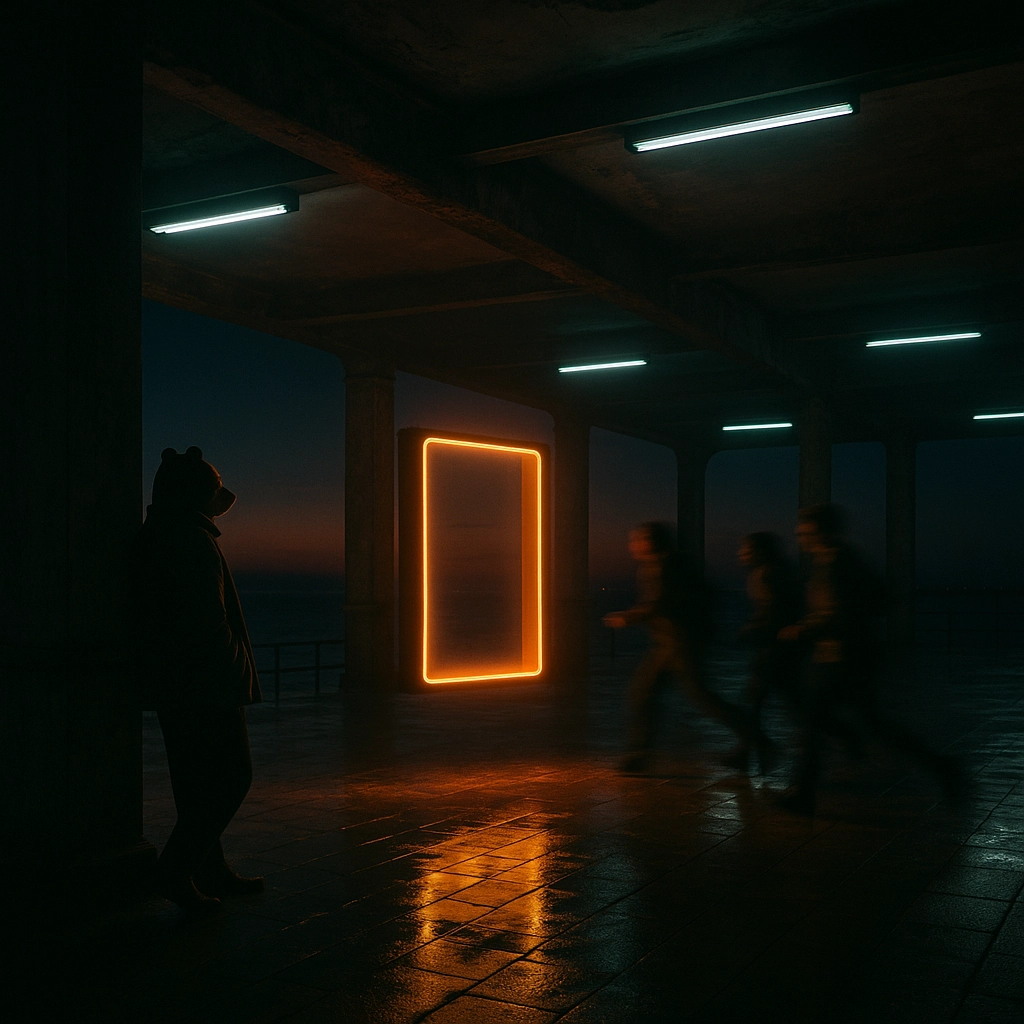
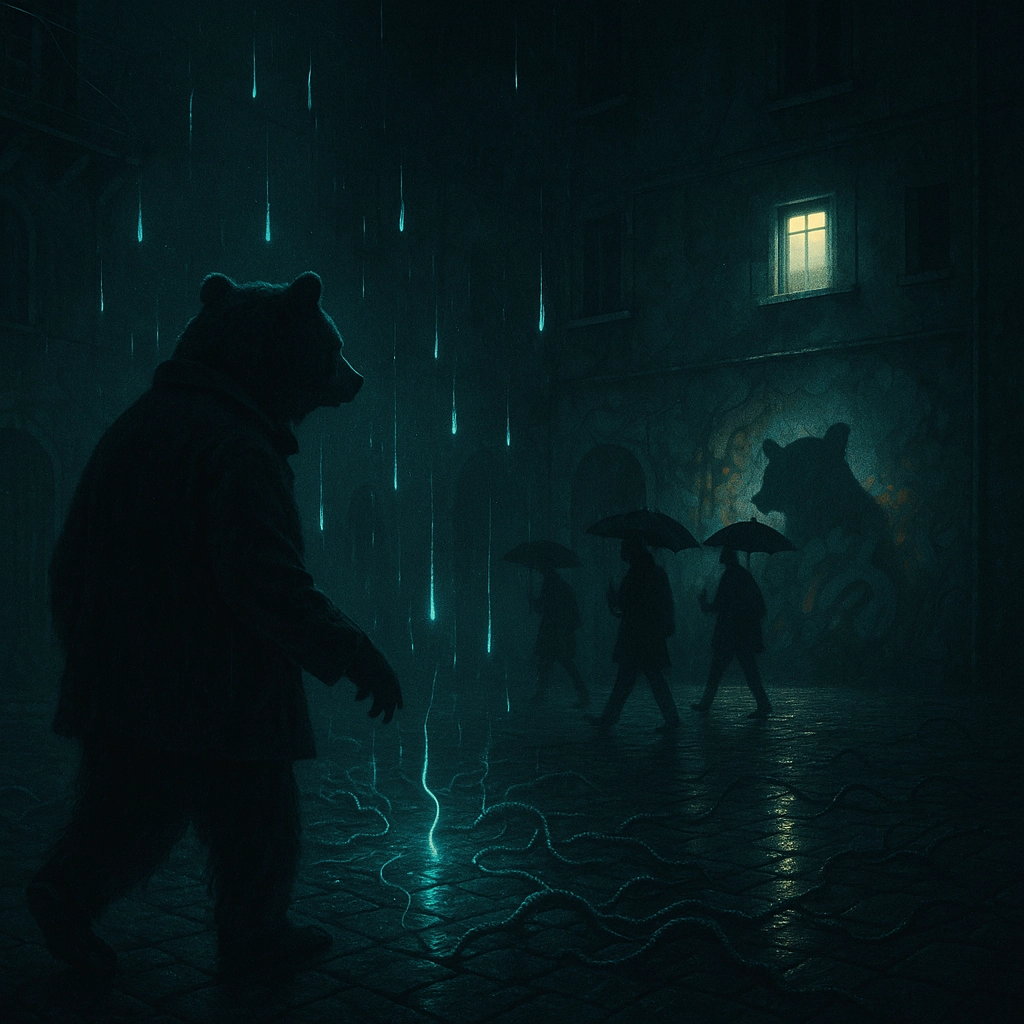
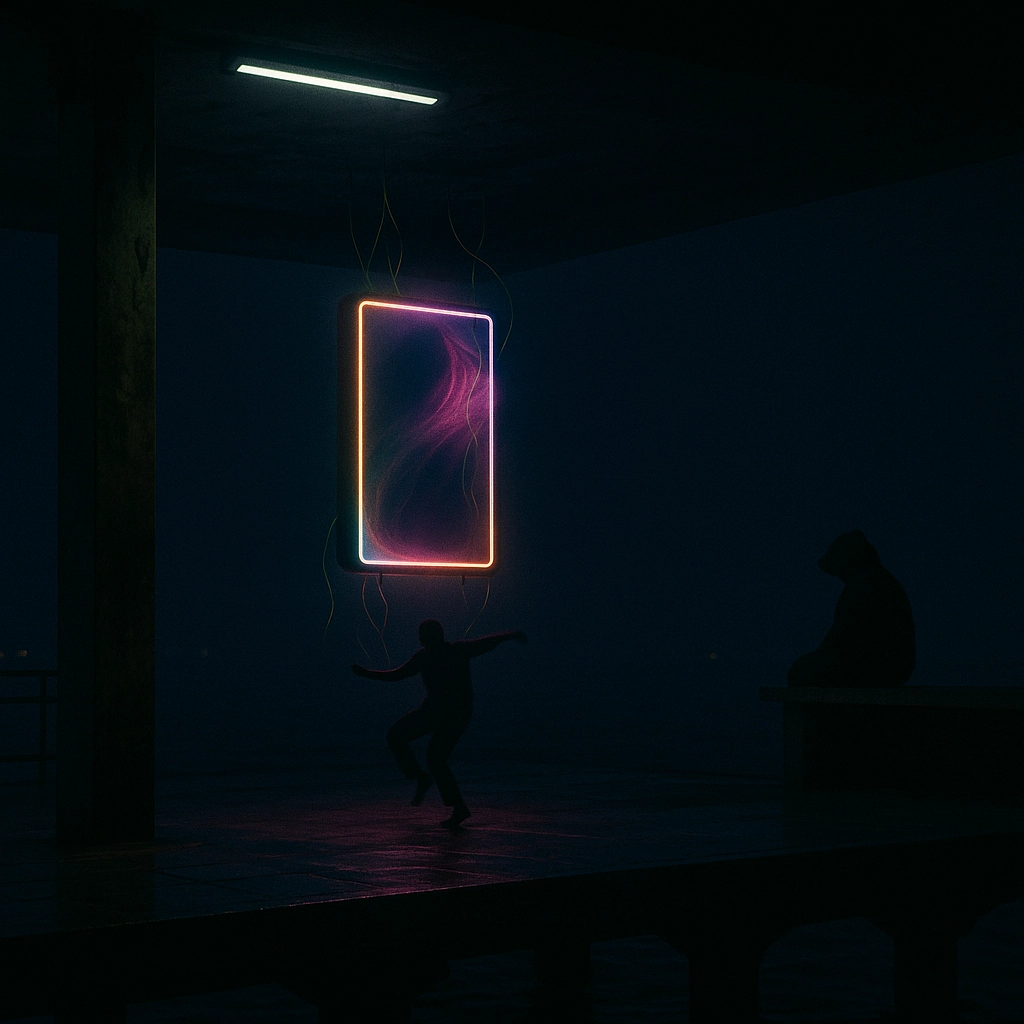
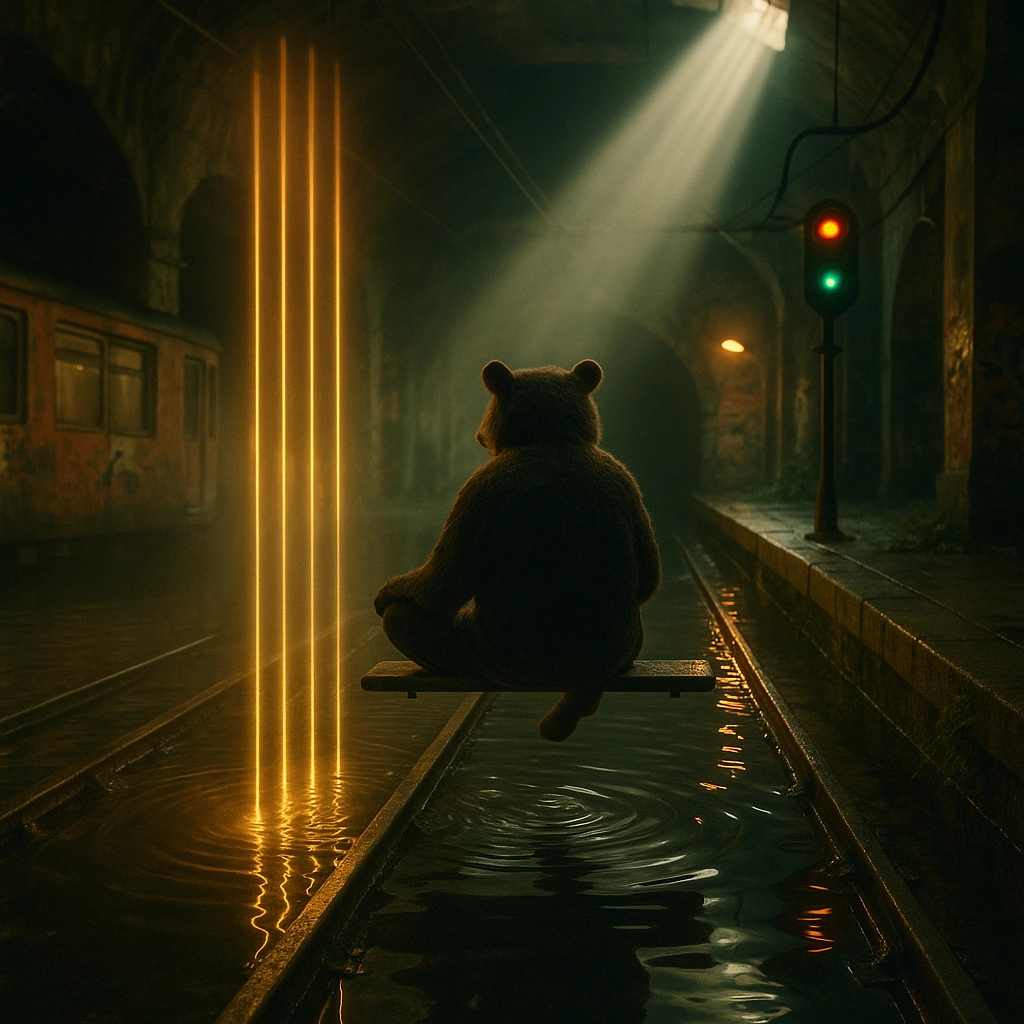
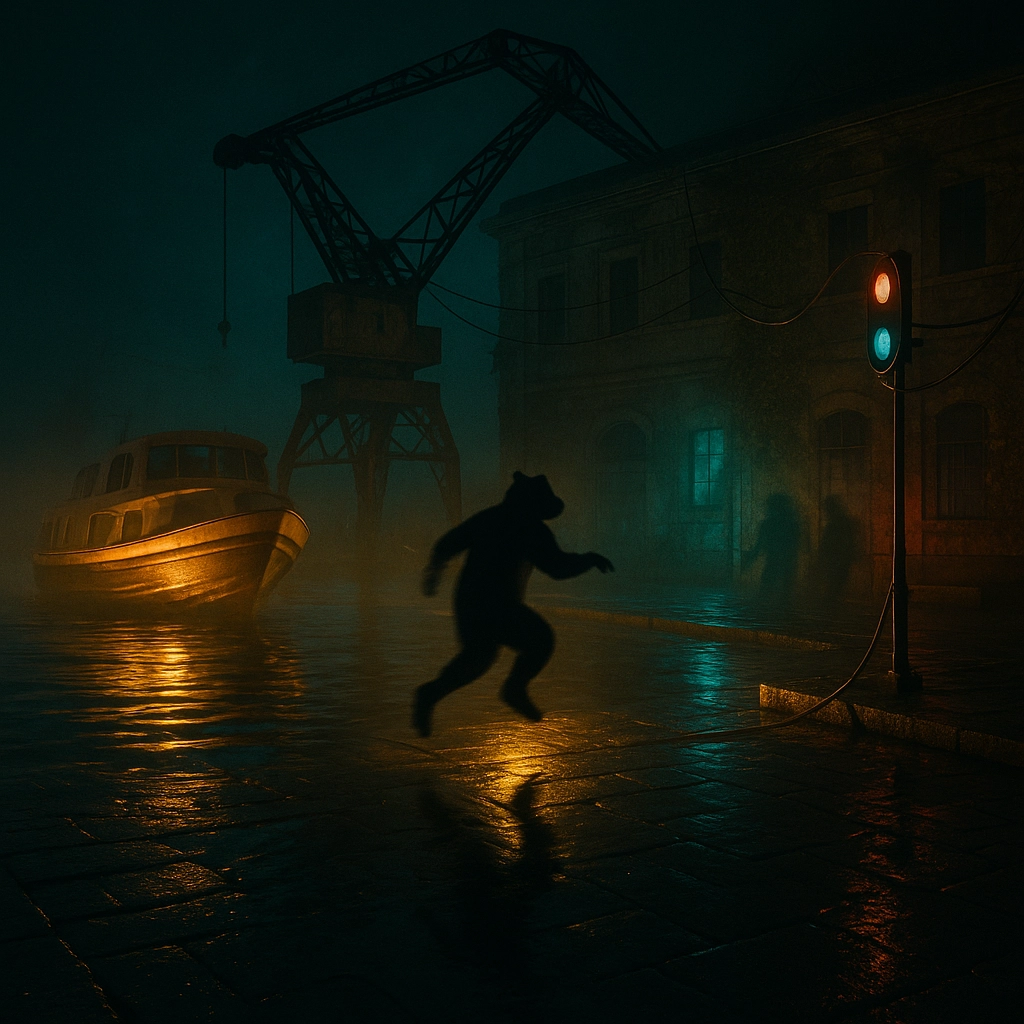
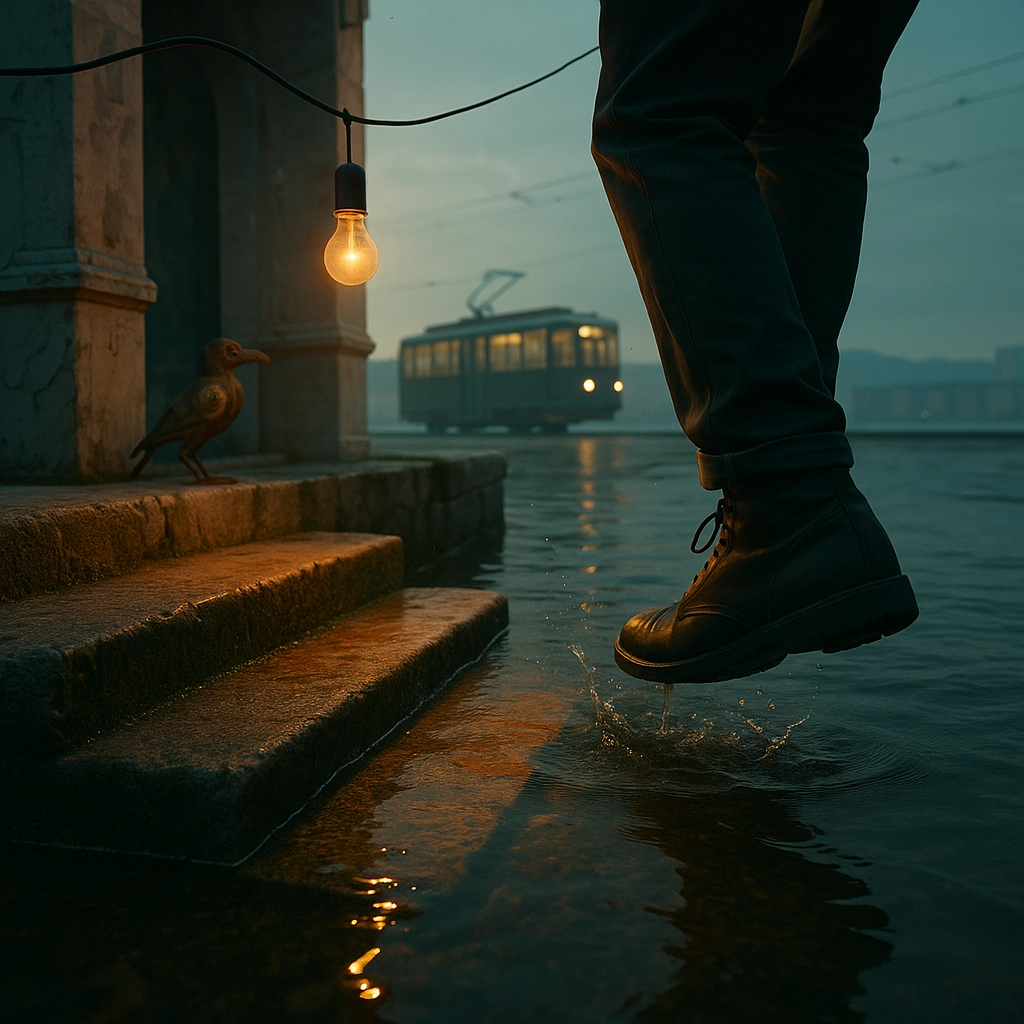
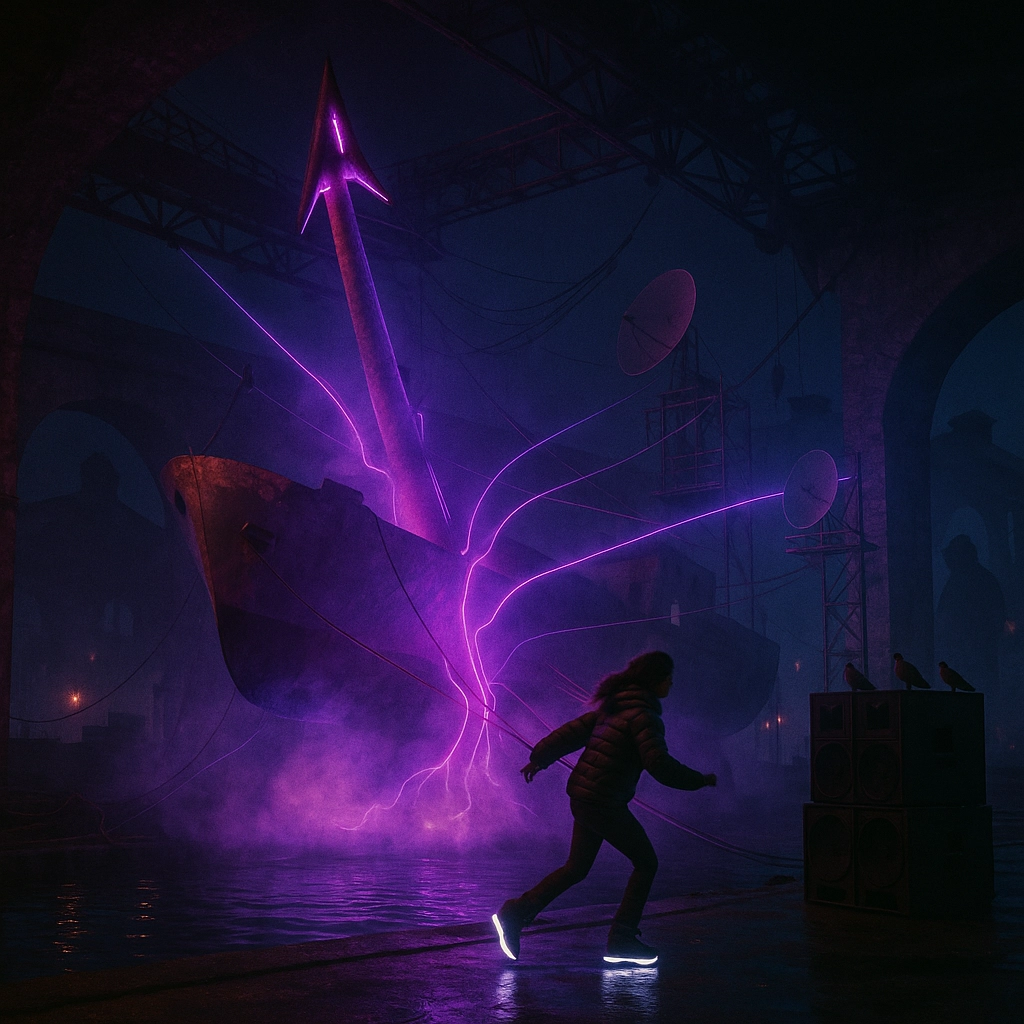
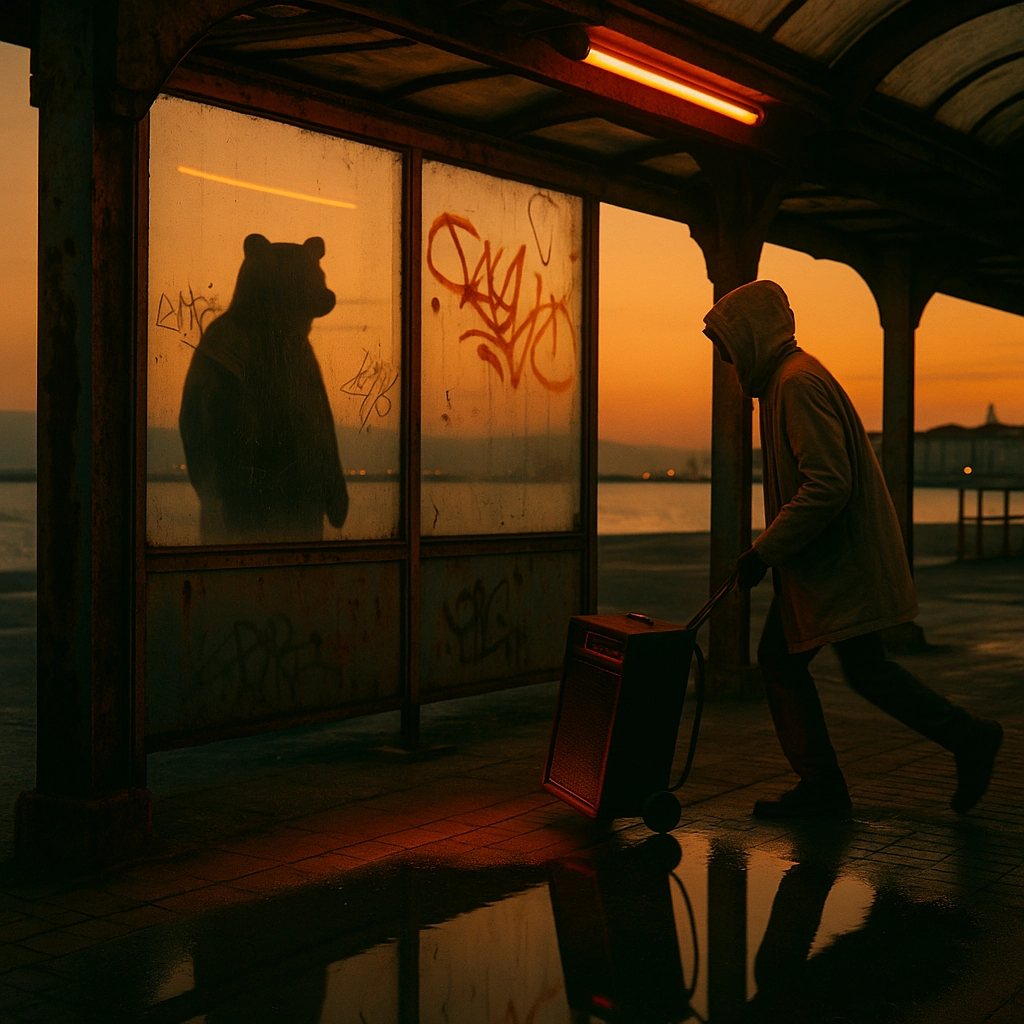
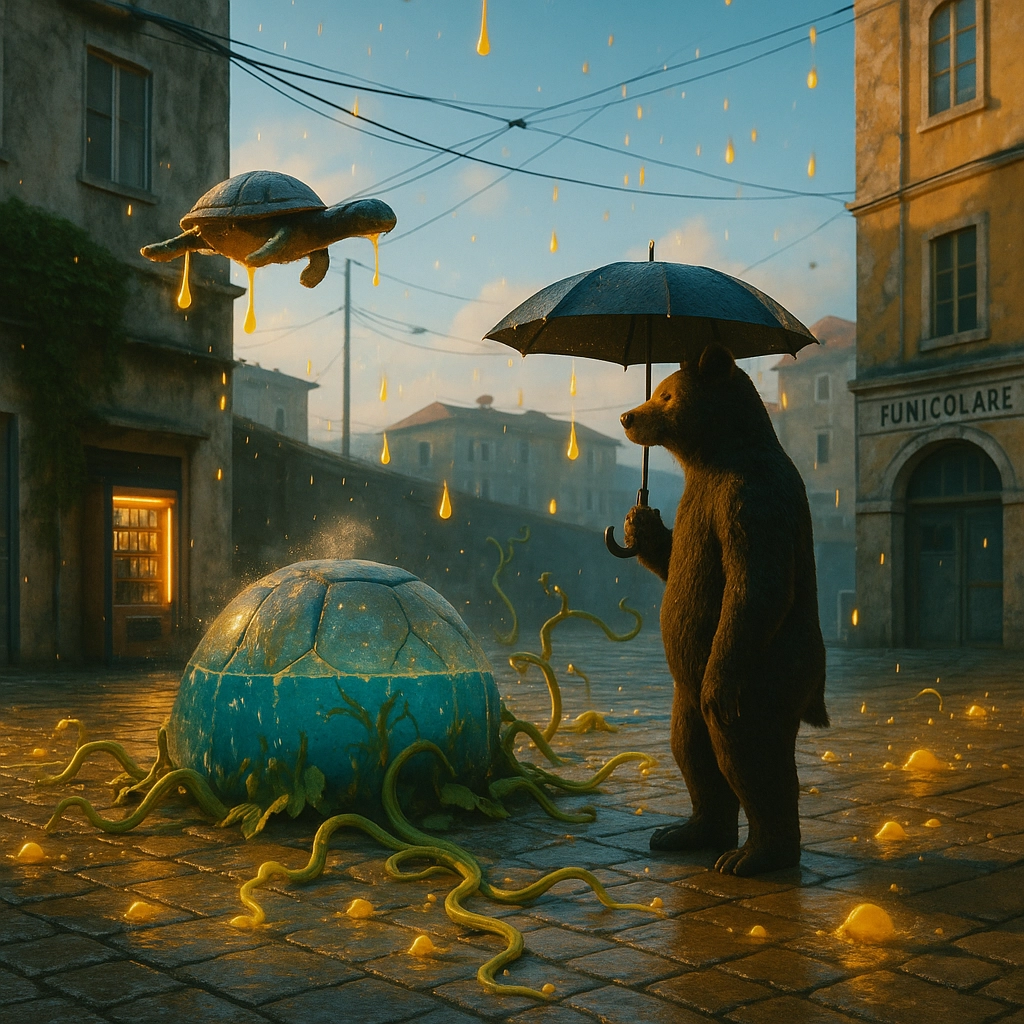
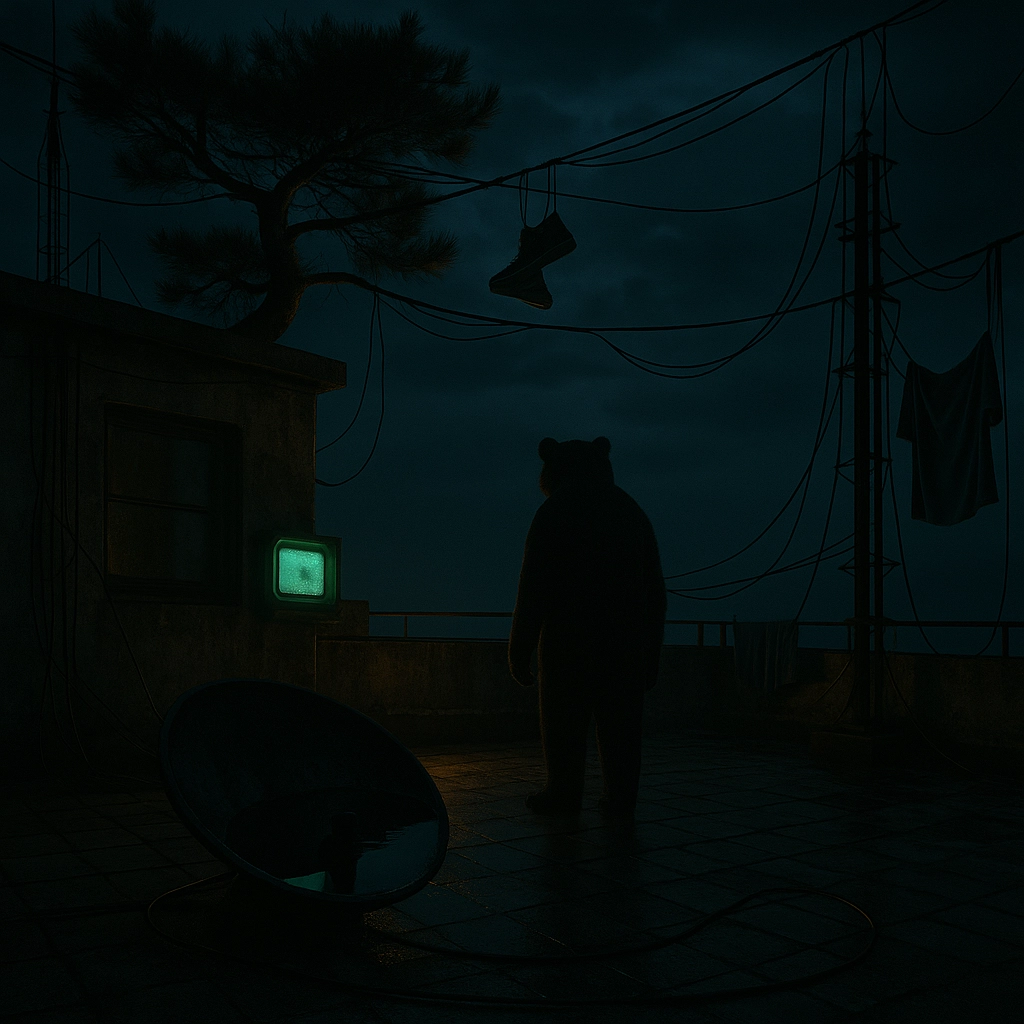
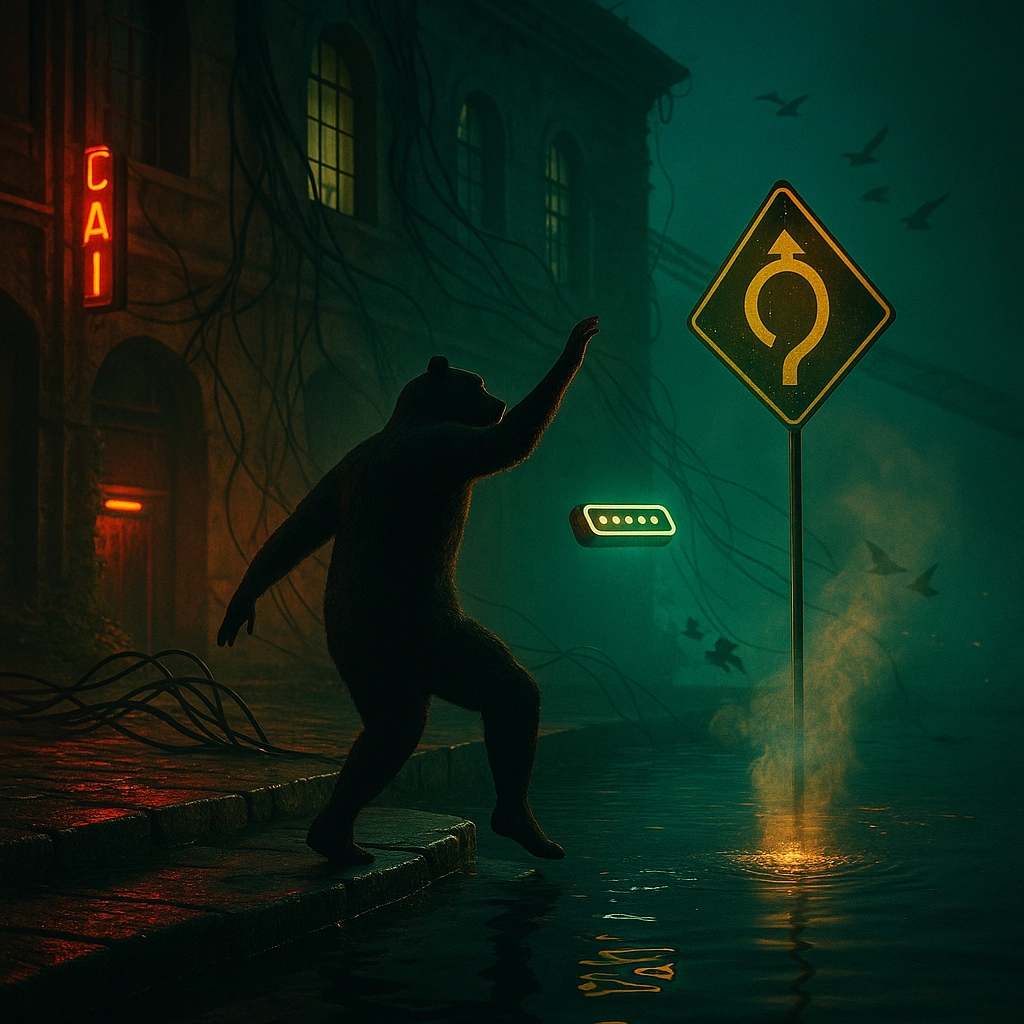
Together, the six mappings mean that every image is a direct consequence of the music that generated it. Change the tempo, and the light changes. Change the technique, and the camera moves differently. The loop is the blueprint.
Five scenes, five keys
Each series has a five-scene cover story, one scene per musical key. Urban legends told in five beats. The five keys form a cyclical sequence. The last scene folds back into the first. The cycle begins again, mirroring the structure of the audio that created them.
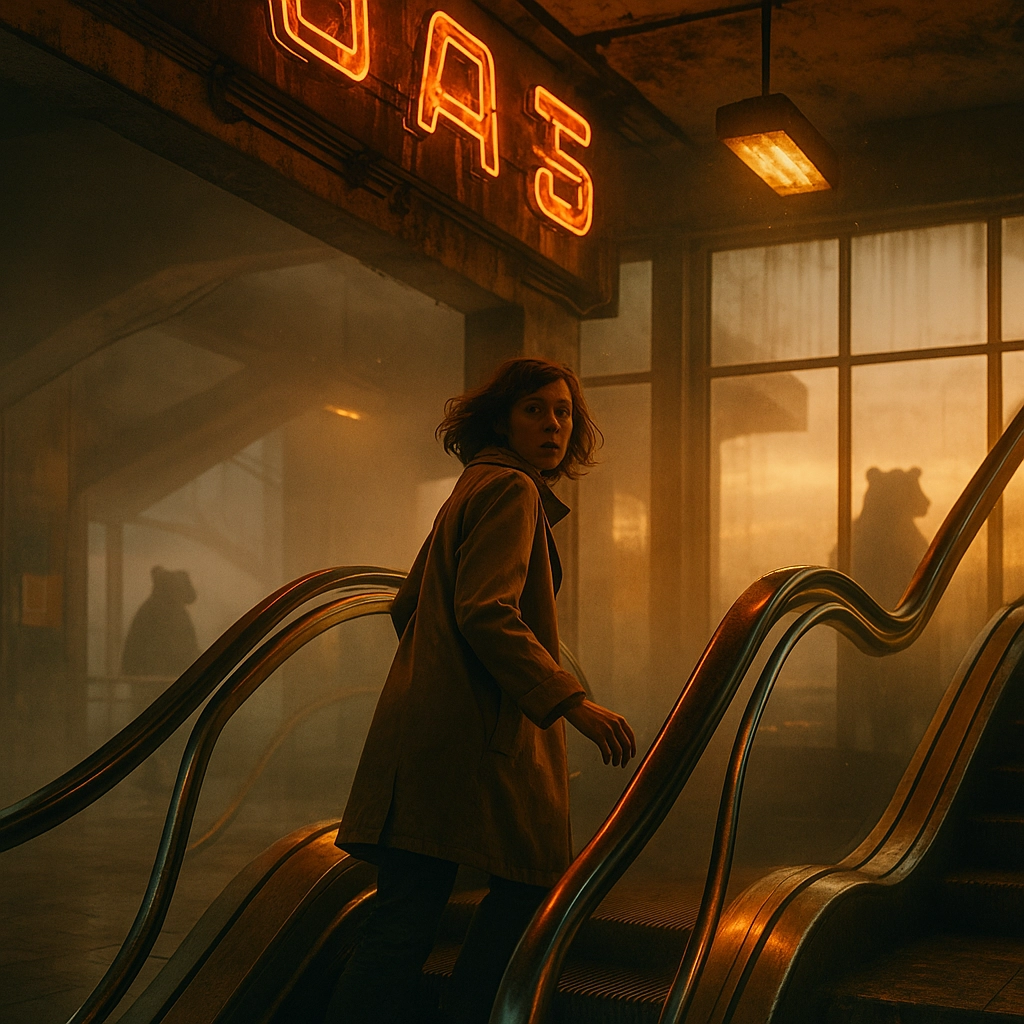
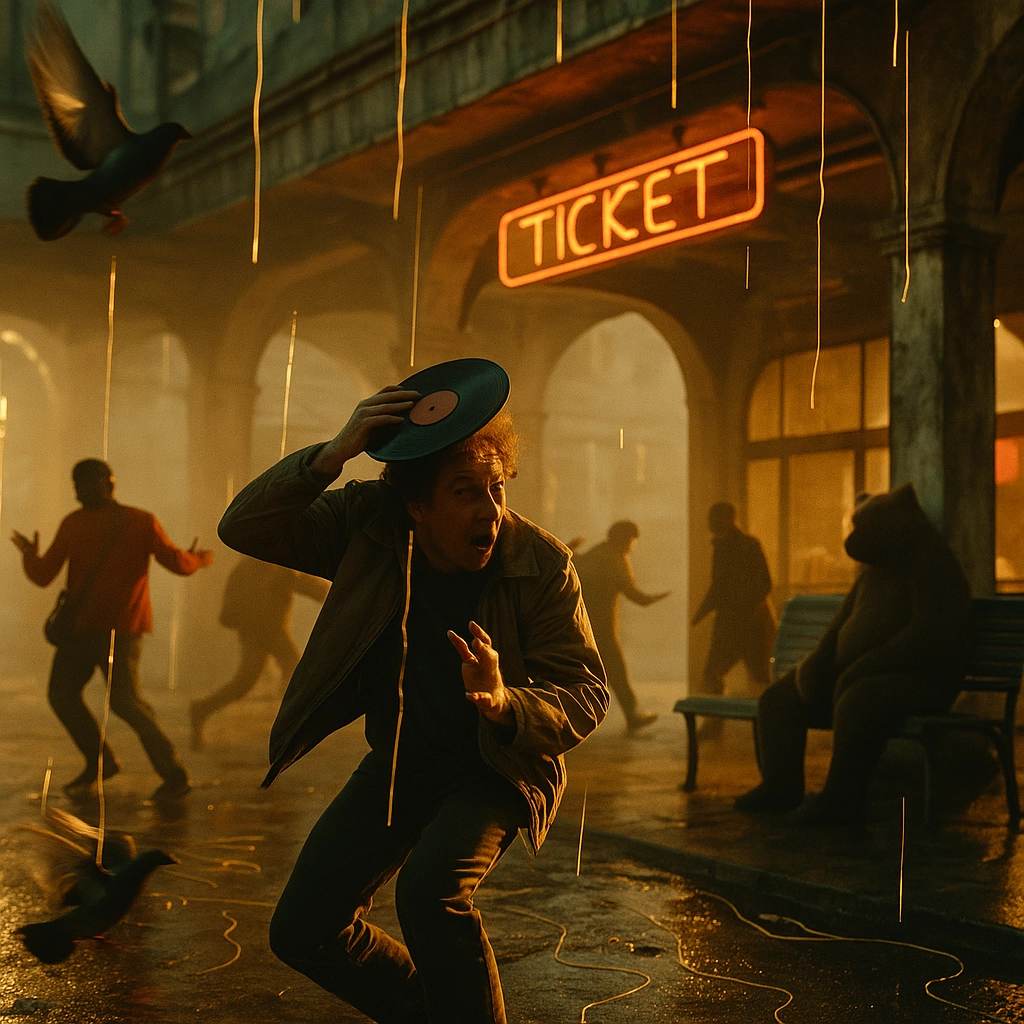
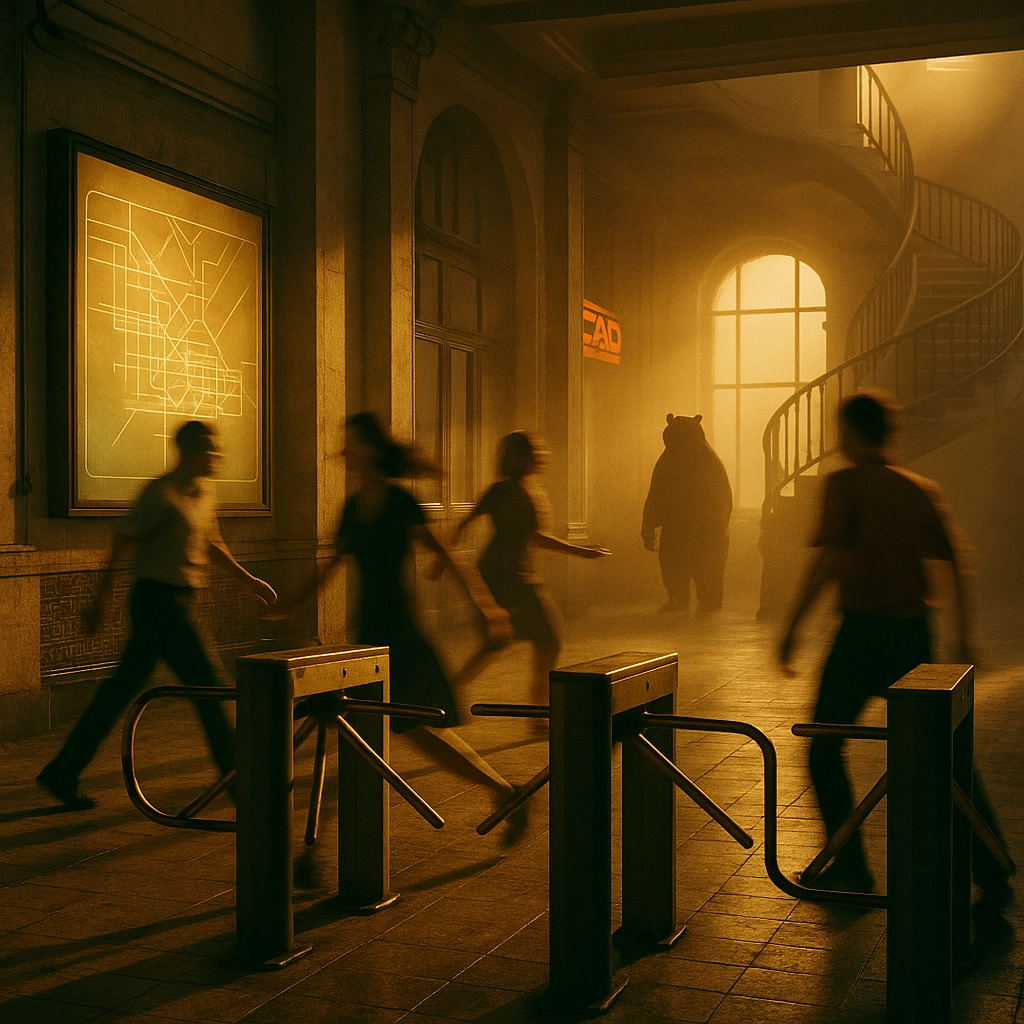
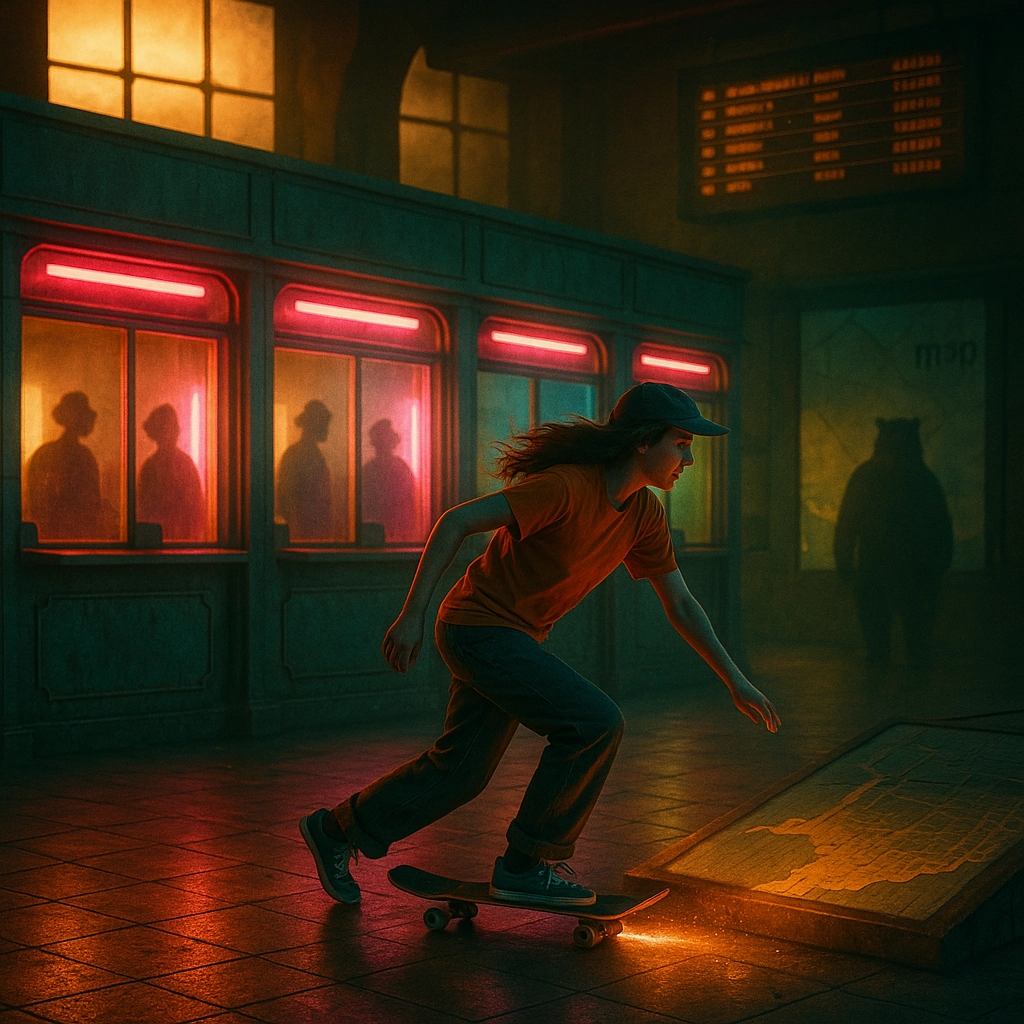
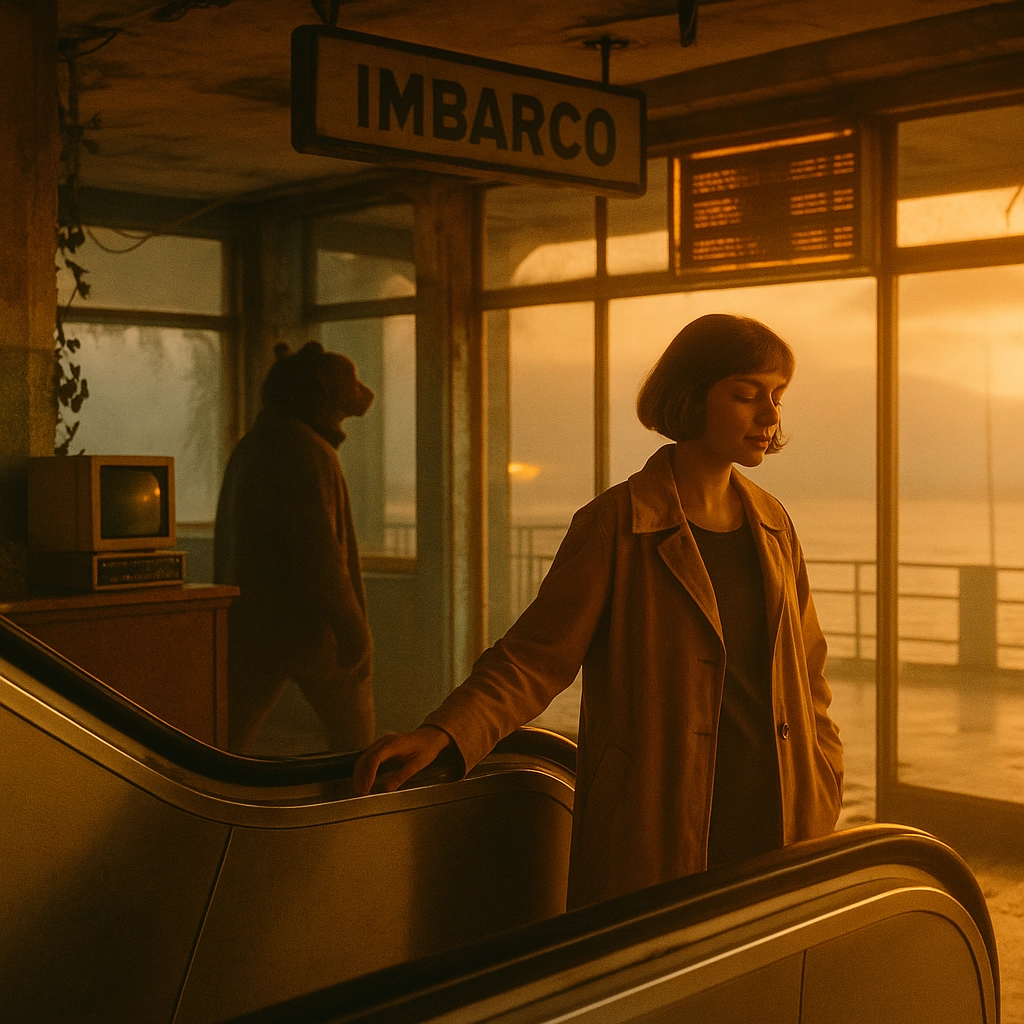
Browse all 470 images in the Gallery.
The city
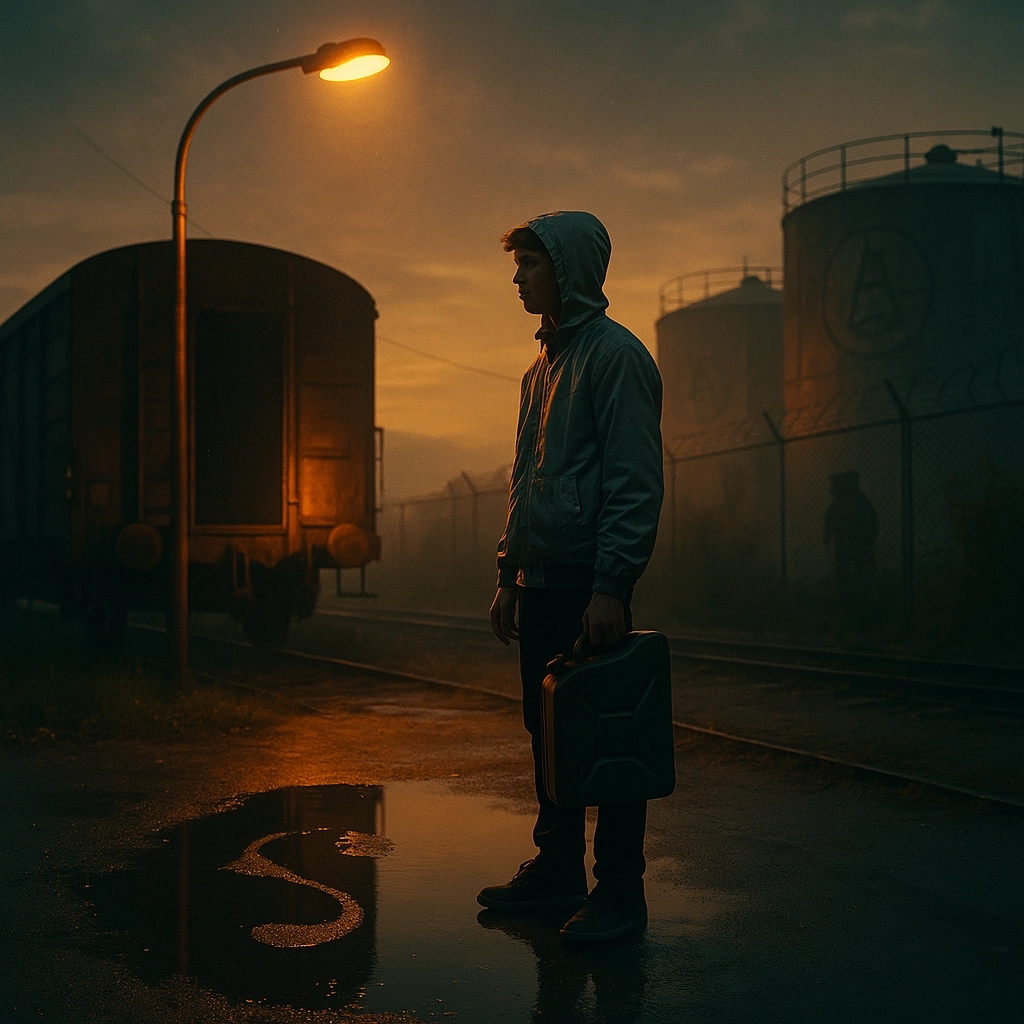
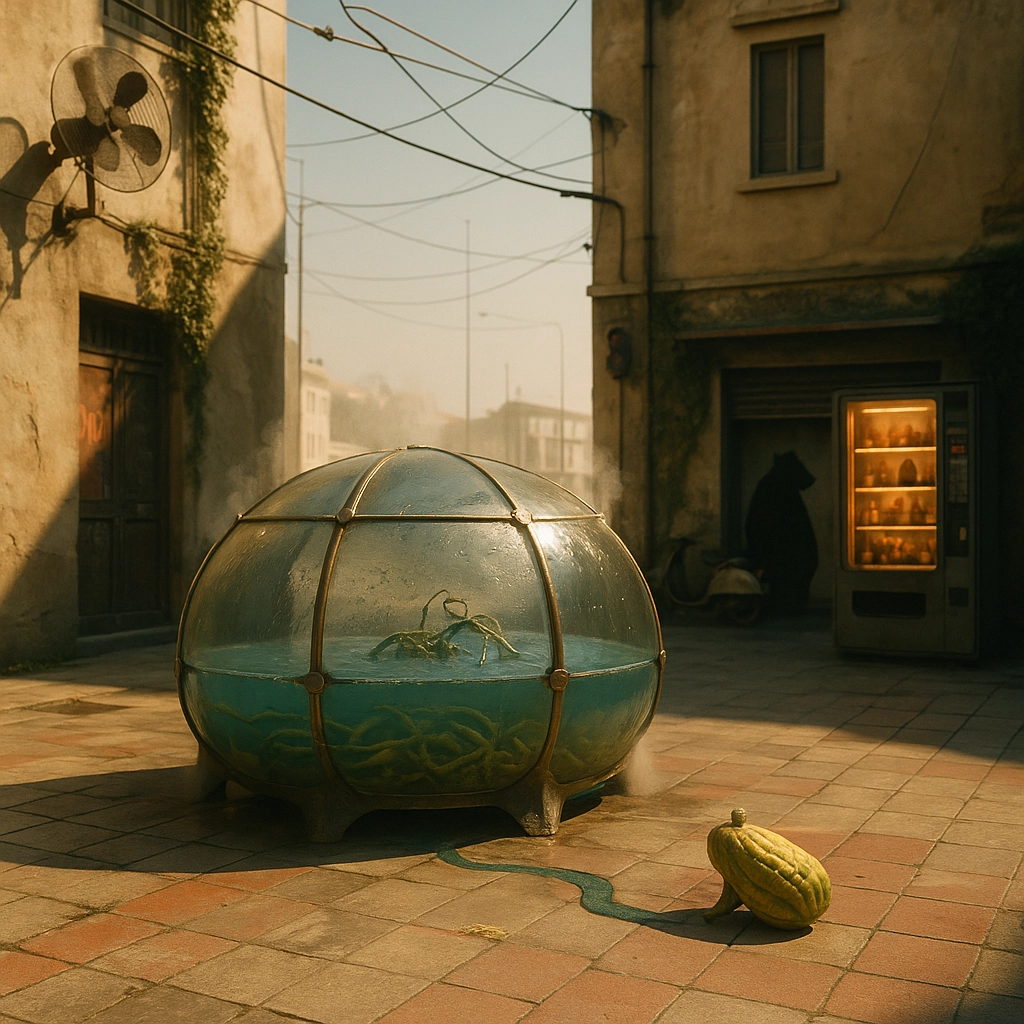
The style is cinematic, high-resolution, hyperreal photography rather than illustration. Urban funk-futurism.
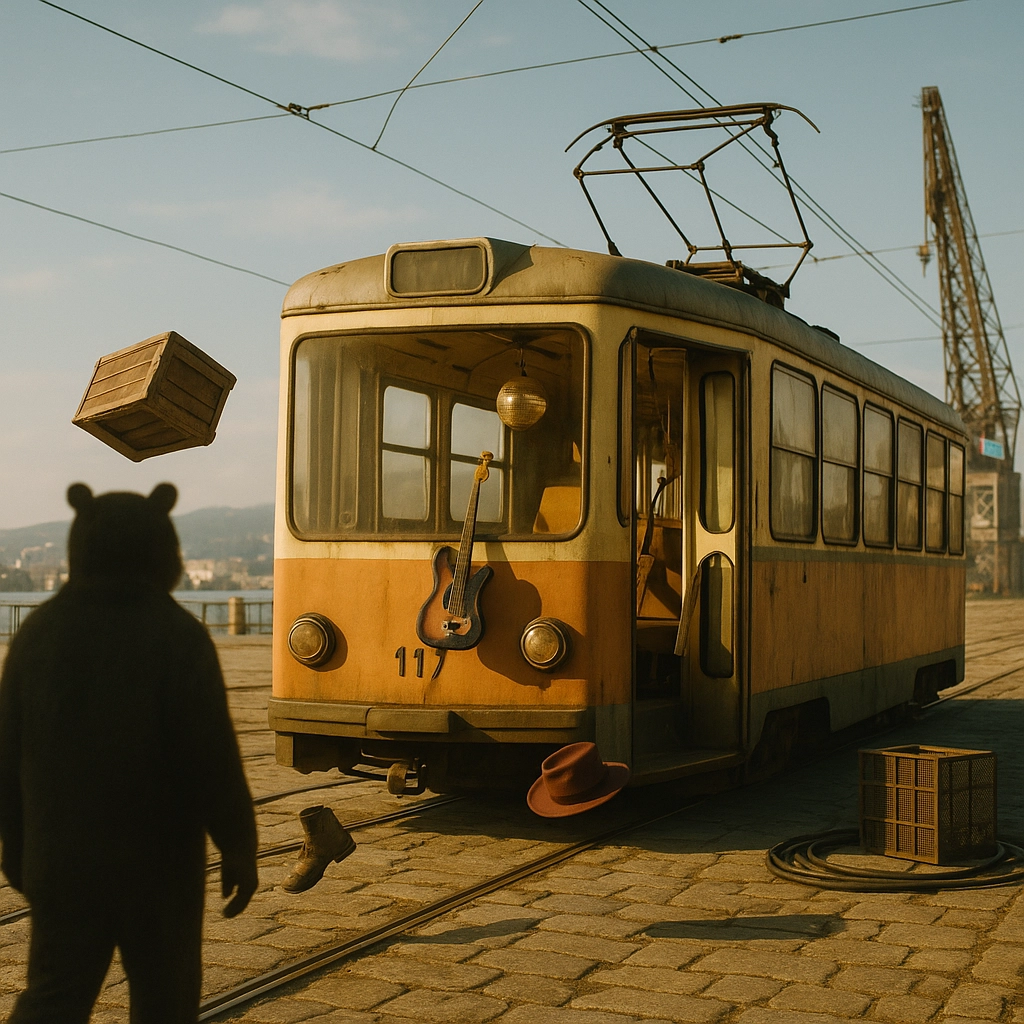
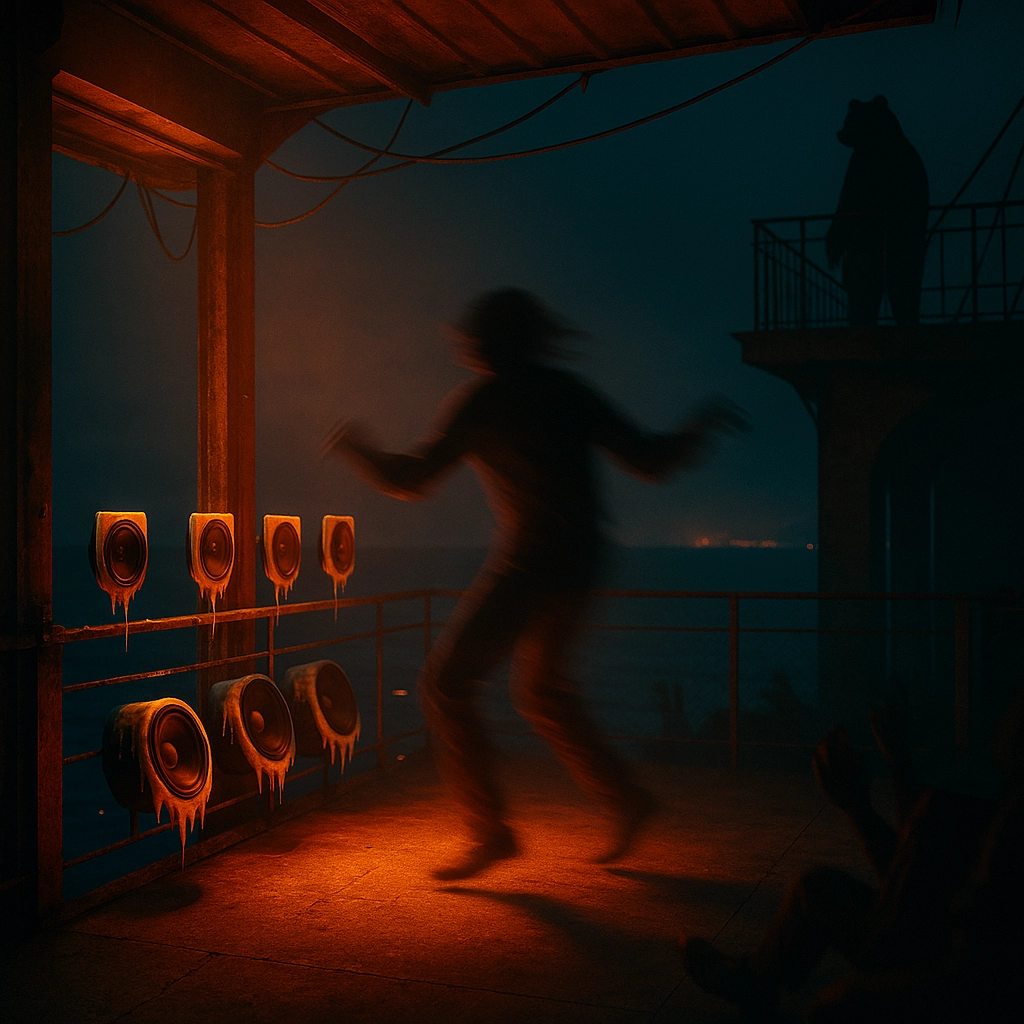
Recurring visual motifs run across all 94 series: water and flooding, analog technology, neon and light, mirrors and reflections, floating objects, and architectural decay. Transportation hubs appear as recurring settings, often abandoned or repurposed: tram depots, funicular platforms, port terminals.
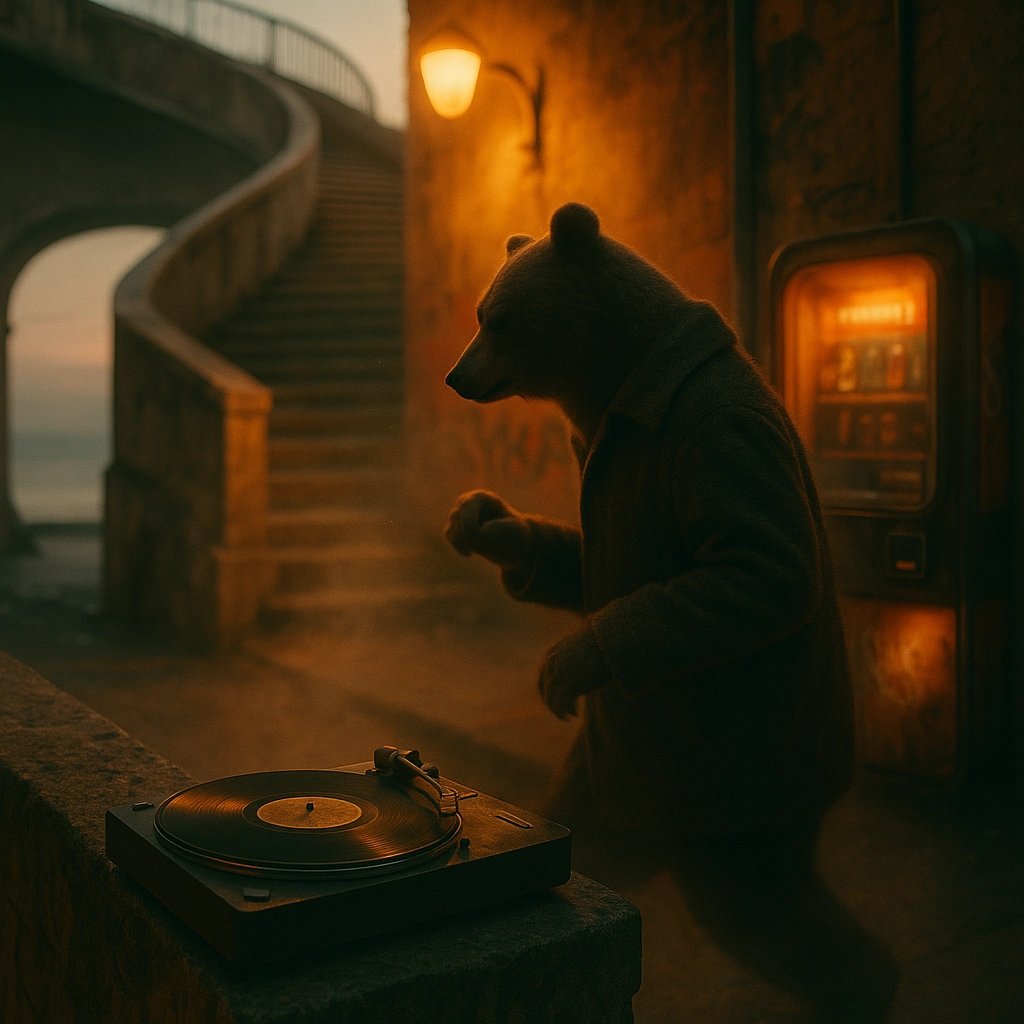
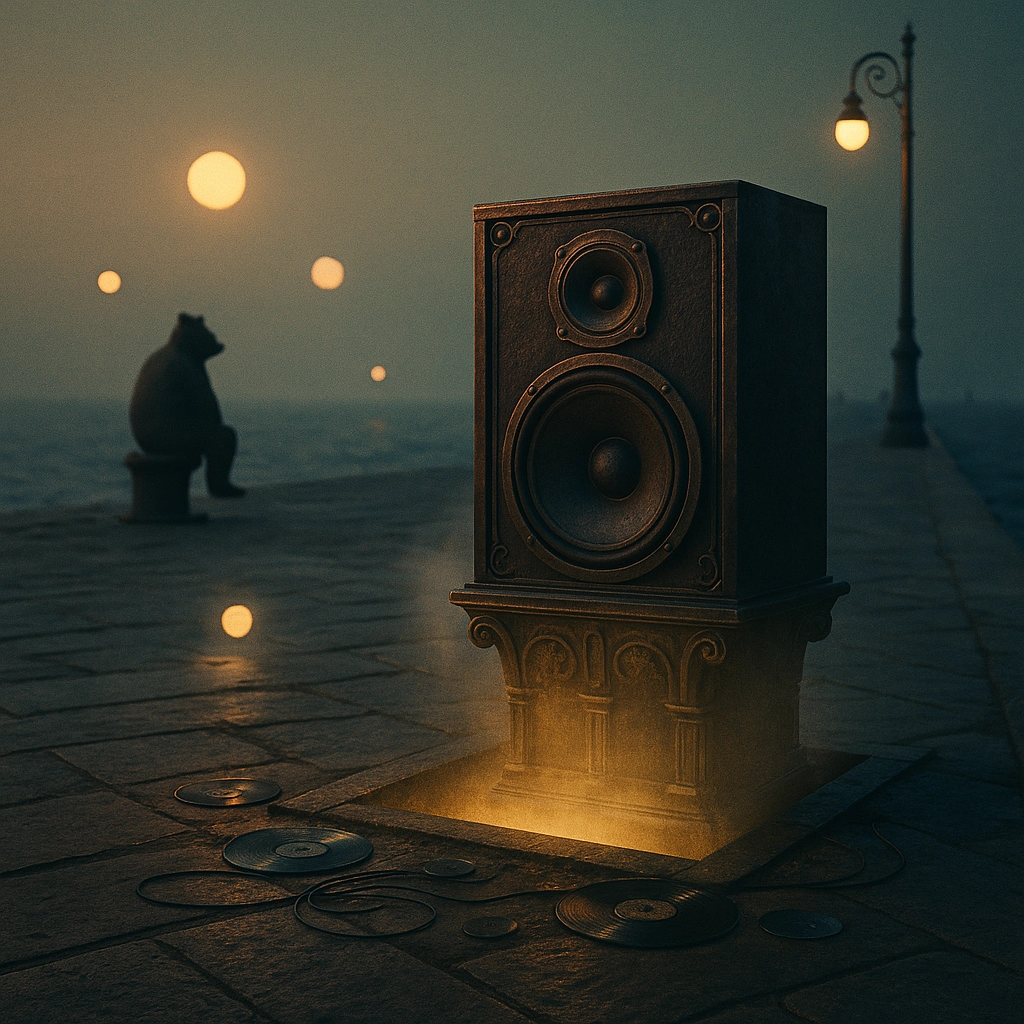
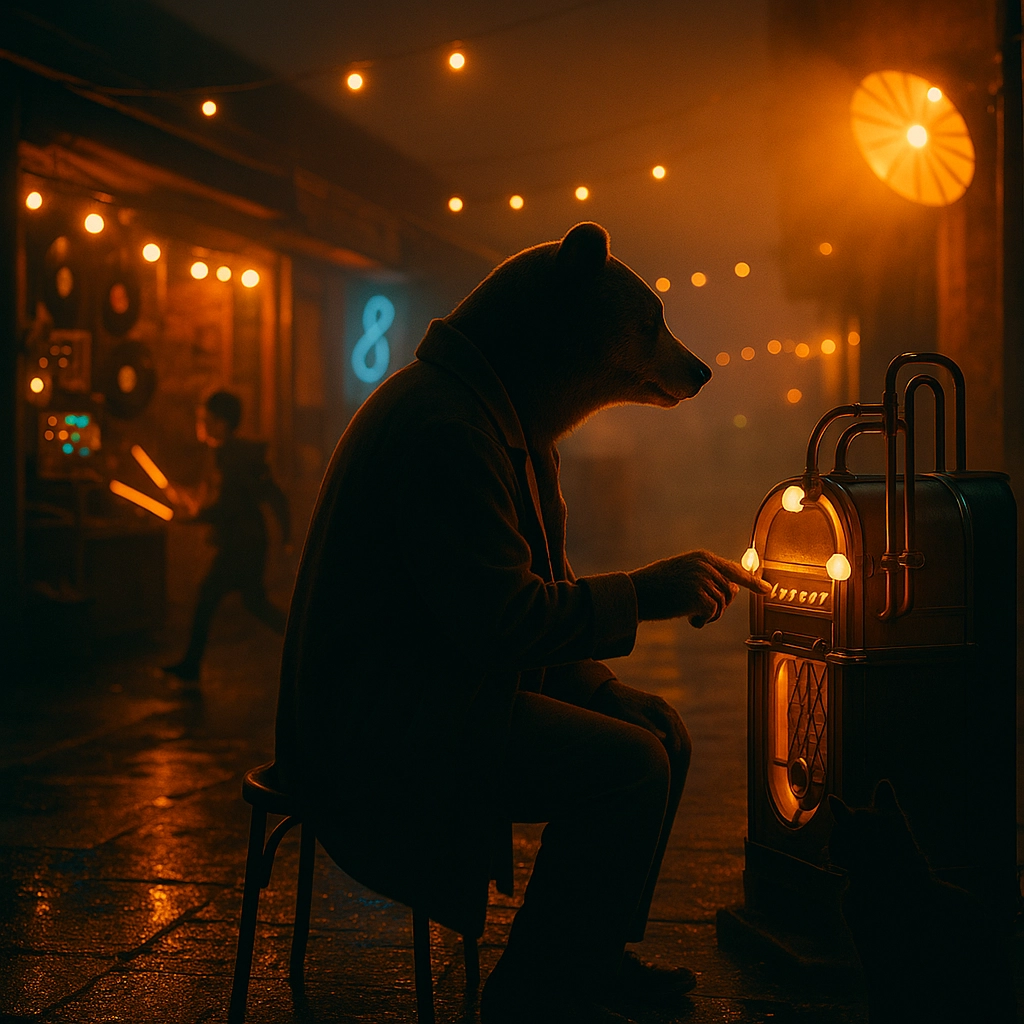
Vintage audio equipment is embedded in the city's fabric: turntables in walls, reel-to-reel machines suspended in air, speaker stacks rising from grates. The city's infrastructure is described in musical terms: funiculars and trams as rhythm boxes, port terminals as sonic shrines, flooded piazzas as underwater dance floors.
Gravity is negotiable. Objects hover mid-air: floating steps, levitating platforms, suspended tram cars, vinyl records spinning in space. The physics follow the music.
Every scene is a translation of audio into a place you can almost walk through, if you do not mind floating.
The bear
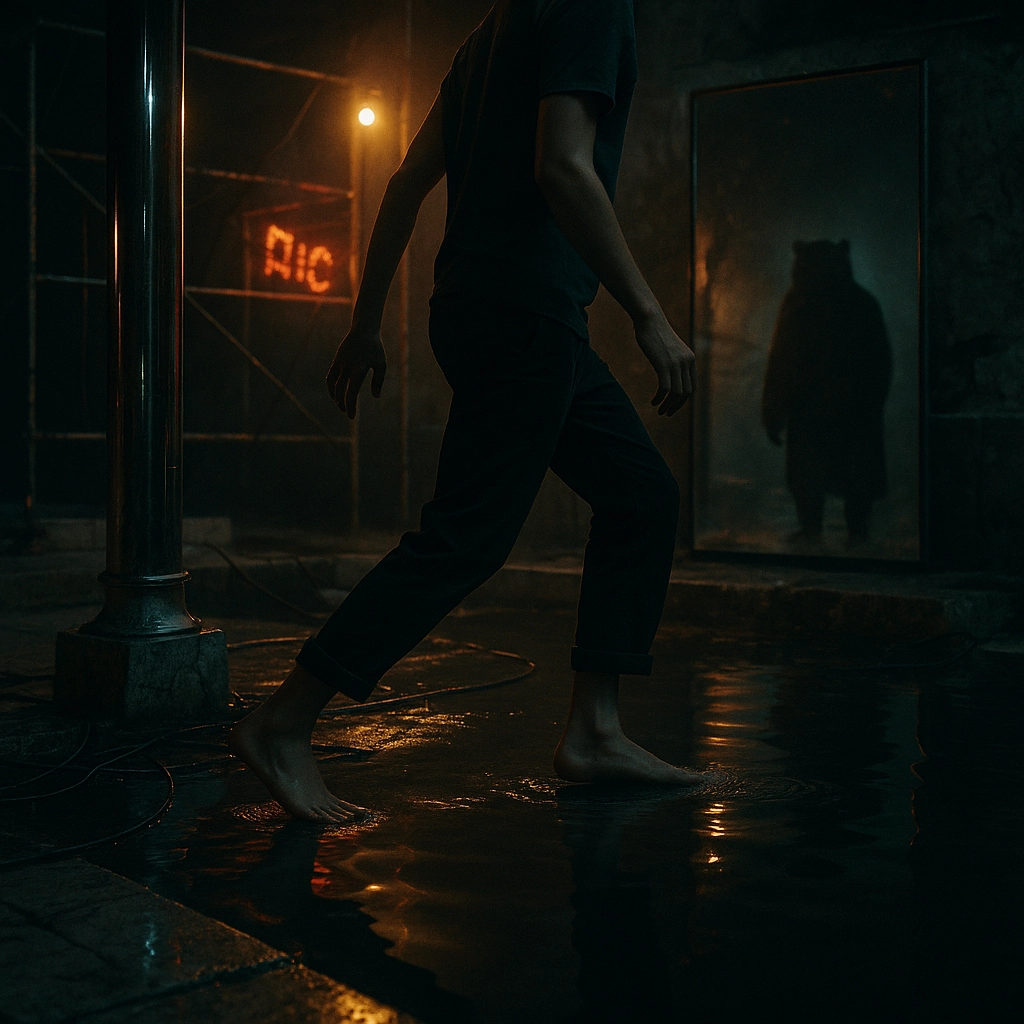
A humanoid bear character appears in the cover images, subtle and peripheral, never the protagonist.
The bear is cool, emotionally neutral, a figure who watches and observes. Often glimpsed in reflections or silhouettes. In some images, the bear appears only in reflections, never in the scene itself.
The bear is symbolic of the artist behind the music. Always present, never the focus. Standing at the edge of the frame the way a builder stands at the edge of what they built, watching it work.
Design of the visual system
The loops are performed work. The names are language. The stories are narrative. The images are the visual layer. All of them trace back to the same source.
The musical-to-visual attribute mapping is consistent across the entire project. A loop's musical character directly shapes its cover image. For each series, the story is generated first from the loop name and musical attributes, then the images are generated from the story. The process connects the visual output back to the audio at every step.
The names start the stories. The music shapes the images. Everything feeds back to the loop. The visuals are the loops, translated into a city, a story, a bear in a reflection.
Every image traces back to audio played on a 1977 Fender Jazz Bass.
Cover image rights
Cover image rights come with the token. See the license for what the owner, the artist, and the public each get.
Continue
3 ways forward